
Want to break a tough habit?
Old patterns can't be erased, but new ones can take over. What it takes is the discipline to stay true to your word.
Is it possible to permanently change a habit? Any habit, from smoking, to procrastinating, to simply not being active enough.
As we go through life, we encounter a wide variety of situations. All of these are stimuli that we respond to. Even choosing not to respond is a response. Based on how that worked out for us, we form patterns in our brains. These patterns essentially are us. Metaphysically speaking, that is the answer to the question, "Who am I?" I am the sum of all the patterns formed in my brain.
Because these patterns form organically, they are ingrained into the very fibre of our being. We identify with them as part of who we are, and any behaviour that isn't consistent with a pattern instantly makes us uncomfortable.
The bad news is that these patterns can't be erased once they're formed. That's why it's easy for someone who quit smoking to start again, or for someone to stop going to the gym (I've been there too).
The good news is that you can create new patterns. If you consistently stick to a new habit, your brain starts to ignore the old ones. The old patterns are still there, but they have less control over you.
What it takes is the discipline to stay true to your word.
I started training in Vipassana meditation about 15 months back, with Narendra Patel and Kiran Chavda. Every morning, or night as the case may be, it is a chore to ask the monkey in my head to sit down in a fixed place and meditate. It is difficult, and sometimes excruciatingly uncomfortable. But every single day, calming that monkey becomes a little bit easier.
This is the method we use at Leaders' Lab with our members. Honouring one's word is the best way to form a new habit.
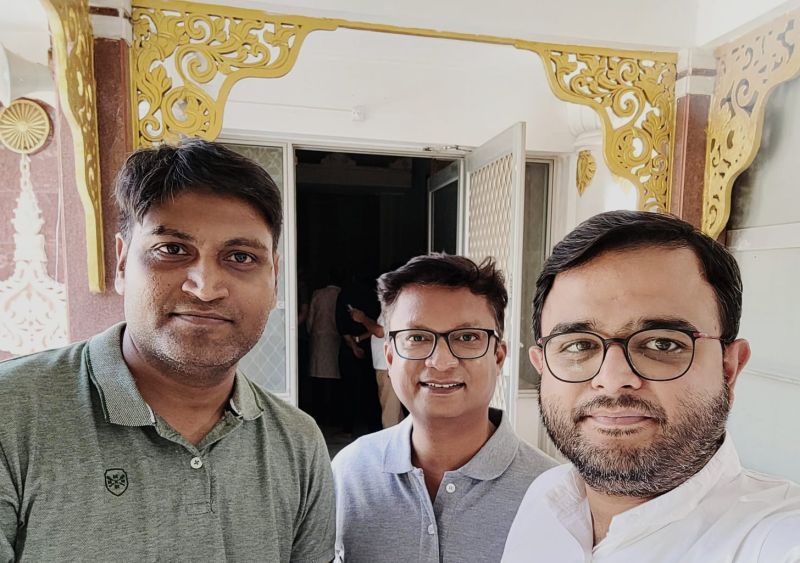
The photo was taken at the birthplace of Vipassana in Igatpuri.